













The Story of Mountain Hardwear: They Left on Halloween
There are brands that get built in boardrooms, and then there are brands that get built by people who couldn't sleep because they had something to prove.
Mountain Hardwear is the second kind.
The story begins on October 31, 1993 — Halloween — when nine people walked out of their jobs together and didn't look back. No safety net. No guarantee of anything. Just a shared conviction that the outdoor gear industry could do better, and that they were the ones to do it. Five women and four men, equal parts industry veterans and idealists, stepping off a cliff together on the scariest day of the year.
As one of them later put it: "I remember that feeling of commitment, thinking, 'Okay, I guess we can't come back from here.'"
Good. That's exactly the kind of people you want making your gear.
The Place They Left — and the Place They Landed
The founders came from Sierra Designs, then owned by a holding company called Odyssey International. The company had a fine reputation, but the founders wanted something the corporate structure couldn't give them: the freedom to design entirely for the mountain, not the market. To build durable equipment that worked because it had to, not because it sold well.
They landed in Richmond, California, in a building that has no business being as good a setting as it is. The Ford Assembly Building — a sprawling, historic brick complex on the San Francisco Bay — had been the birthplace of Model A Fords. By 1993, it was managed as part of a National Historical Park, with a sea wall walk and views of the San Francisco skyline across the water. Inside those industrial walls, Mountain Hardwear set up shop. Employees could kayak on the bay at lunch. Dogs roamed the open floor plan. Big skylights poured sun onto desks covered in gear prototypes and trail maps.
It was, from day one, the kind of place where you could tell the gear would be good — because the people making it actually wanted to be there.
The Woman Who Sweated Every Seam
The late Ingrid Harshbarger was one of the brand's founders and the original apparel designer at Mountain Hardwear. Known for her meticulous attention to detail, sweating every seam and every stitch, her next-level craftsmanship made a powerful mark on the brand and put it on the map.
In those early years, Mountain Hardwear was doing patterns and prototyping entirely in-house. Ingrid led the sewing room — alongside original seamstresses Kimiyo and Shu Mei Cheung — with a standard that hasn't left the brand's DNA since: whether you're going somewhere with extreme weather or you want to wear something for an extremely long time, it all depends on having extremely good gear.
That conviction showed up immediately. In 1994, Mountain Hardwear debuted its first product, the Chill Factor Fleece Jacket, at a trade show. It wasn't flashy. It was just really, really well-made. The kind of thing people bought, used hard, and never threw away.
The Climber Who Carried the Brand Up Everest
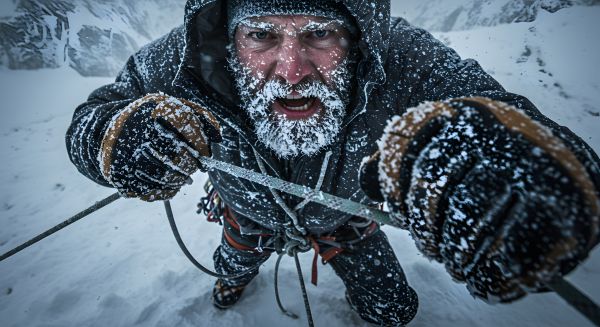
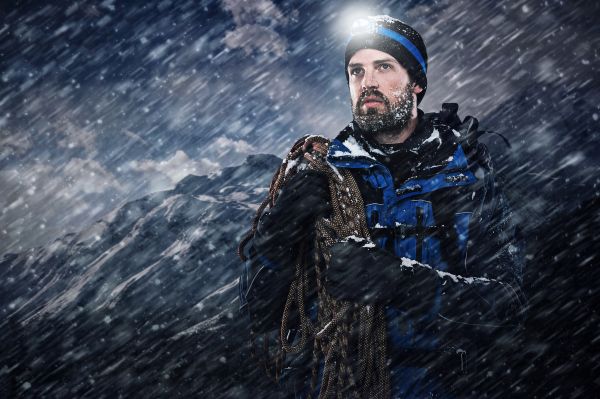
Soon after the company was founded, Mountain Hardwear teamed up with American mountaineer Ed Viesturs, who went on to establish his reputation as one of the greatest mountaineers in history by climbing all 14 of the tallest peaks in the world without the use of supplemental oxygen.
Viesturs wasn't just a walking advertisement. He provided both the hands-on research and expert design consultation needed to build elite technical clothing, while also using those same clothes, tents, and gear to ascend Mount Everest, Annapurna, and others. Viesturs gave the brand credibility as a serious outdoor company, as well as the visibility that comes with standing on top of the highest point on Earth with the Mountain Hardwear logo on his chest.
This was 1996. Three years after nine people walked out of their jobs on Halloween. They were already dressing someone at the summit of Everest.
The Technology That Changed How Jackets Are Made
Mountain Hardwear didn't just compete with the existing gear industry. They rewrote parts of it.
They pioneered Windstopper fleece in 1996, welded clothing construction in 1998, Gore-Tex XCR in 2000, and waterproof sleeping bags in 2003. Each of those was a genuine industry first — not a marketing claim, but a manufacturing breakthrough that other brands eventually had to reckon with.
The welded construction story is worth pausing on. Early designer Cheryl Knopp and Mountain Hardwear pioneered the welding and taping process of garment construction with the Synchro™ Jacket. This method allowed the garment to be lighter, more efficient with no stitching, and made for a technical, modern, clean style still used in today's designs.
Think about what that means: no seams to fail. No needle holes for water to find. A jacket that's cleaner, lighter, and more durable than anything stitched together, because it isn't stitched together at all. That technology was born in a Richmond sewing room in the late '90s, and it's still shaping how technical outerwear gets made today.
What Mountain Hardwear Actually Makes
The product lineup Mountain Hardwear has built over three decades covers the full range of what serious outdoor adventurers need — from the summit to the campground:
- Insulated jackets and vests — down and synthetic, ultralight to expedition-grade
- Rain shells and hardshells — GORE-TEX and proprietary waterproof constructions
- Fleece and midlayers — for layering systems from car camping to alpine climbing
- Sleeping bags — three-season and expedition options in both down and synthetic
- Tents — ultralight backpacking shelters to freestanding base camp designs
- Pants, base layers, and technical apparel — built for movement and weather resistance
- Packs and duffels — daypacks through large-capacity expedition bags
The throughline across all of it is the same one Ingrid Harshbarger carried into that sewing room in 1993: every gram is accounted for, every seam matters, and the gear has to work when it counts.
What's Worth Grabbing at Quest Outdoors
You don't have to be heading to an 8,000-meter peak to benefit from gear built for one. Here's what's consistently earned its place — in the packs of serious alpinists and in the closets of people who just want a jacket they'll still be wearing in ten years.
Ghost Whisperer Series The Ghost Whisperer series is Mountain Hardwear's best-selling line, built around a 100% recycled, light-as-a-feather shell. The down jacket version — available in men's and women's cuts — is the one that made the Ghost Whisperer famous: it stuffs into its own pocket, weighs almost nothing, and is genuinely warm. It's the jacket people reach for on every single trip, at every temperature, in every season. If you own one, you know. If you don't, this is the one to start with.
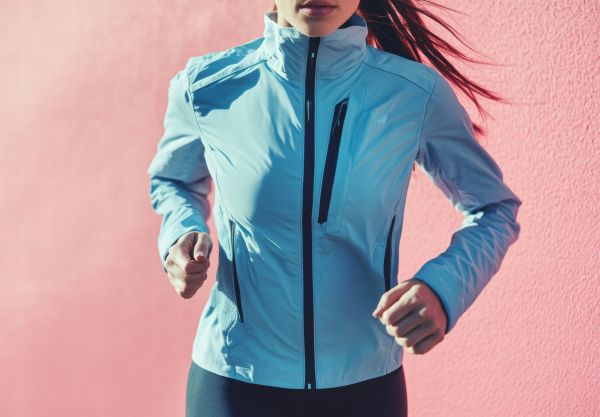
Stretch Ozonic Jacket The rain shell for people who hate feeling like they're wearing a rain shell. The Stretch Ozonic uses Mountain Hardwear's own waterproof-breathable construction with a fabric that actually stretches — which matters more than it sounds when you're scrambling over wet rocks or moving fast on a ridge. It's been a standout piece in the lineup for good reason: it protects you in real weather without making you feel like you're encased in plastic.
Stretchdown Series Down insulation with stretch built in — an idea that sounds obvious until you realize how few brands have actually cracked it. The Stretchdown hoodies, jackets, and vests are built for movement, which makes them especially useful for active days in cool weather: hiking, climbing, skiing, or any situation where a traditional puffy would feel constricting. The warmth-to-weight ratio is excellent and the fit is athletic without being uncomfortable.
Phantom Sleeping Bag Mountain Hardwear's gold-standard alpine sleeping bag, the Phantom is ideal for high-alpine traverses, backcountry hut trips, and multi-week backpacking adventures. It uses the same 100% recycled shell as the Ghost Whisperer series with RDS-certified 800-fill down insulation. Available in several temperature ratings — 0°F, 15°F, and 30°F — it covers everything from shoulder-season backpacking to serious winter camping. The warmth-to-weight ratio is exceptional, and it's built to last the way the founders intended their gear to last: for a very long time.
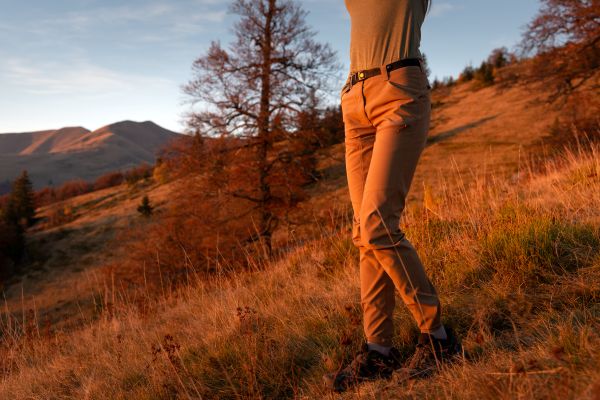
Chockstone Alpine Pants The pants that finally made technical climbing pants approachable for everyone. Stretchy, durable, with a clean enough look that you can wear them off the crag without announcing that you spent the day on rock faces. They move well, dry fast, and hold up to the kind of abuse that most pants tap out of early.
Thirty Years In, Still Making It Harder to Go Back
After 30 years in business, Mountain Hardwear is old enough to know better and young enough to do it anyway. That's not a marketing line — it's an accurate description of a brand that has been legitimately innovating since before most of its current customers were buying outdoor gear, and still hasn't settled into the comfortable middle.
The nine people who walked out on Halloween 1993 built something durable. Not just in the literal sense — though the gear absolutely is — but in the sense that the thing they were trying to do, design for the mountain instead of the masses, is still what the brand does. The sewing room still matters. The seams still get sweated. Ed Viesturs is still an ambassador.
All of it is available right here at Quest Outdoors. Come take a look, ask us what we've worn on the trail, and find the pieces that belong in your kit.
Shop Mountain Hardwear at Quest Outdoors →
Have Mountain Hardwear gear that's gone the distance with you? Tag us on Instagram @QuestOutdoors and show us where it's been.